
 Mental health conditions such as depression and anxiety can be life-altering, affecting mood, motivation, relationships, and overall quality of life. While medication and psychotherapy are effective for many individuals, they do not work for everyone—and some people experience unwanted side effects or limited relief.
At Northwest Psychiatry & Counseling, we are committed to offering advanced, evidence-based treatment options. One such option is Transcranial Magnetic Stimulation (TMS), a non-invasive, non-drug treatment that has helped many individuals find relief when other treatments have fallen short.
What Is Transcranial Magnetic Stimulation (TMS)?
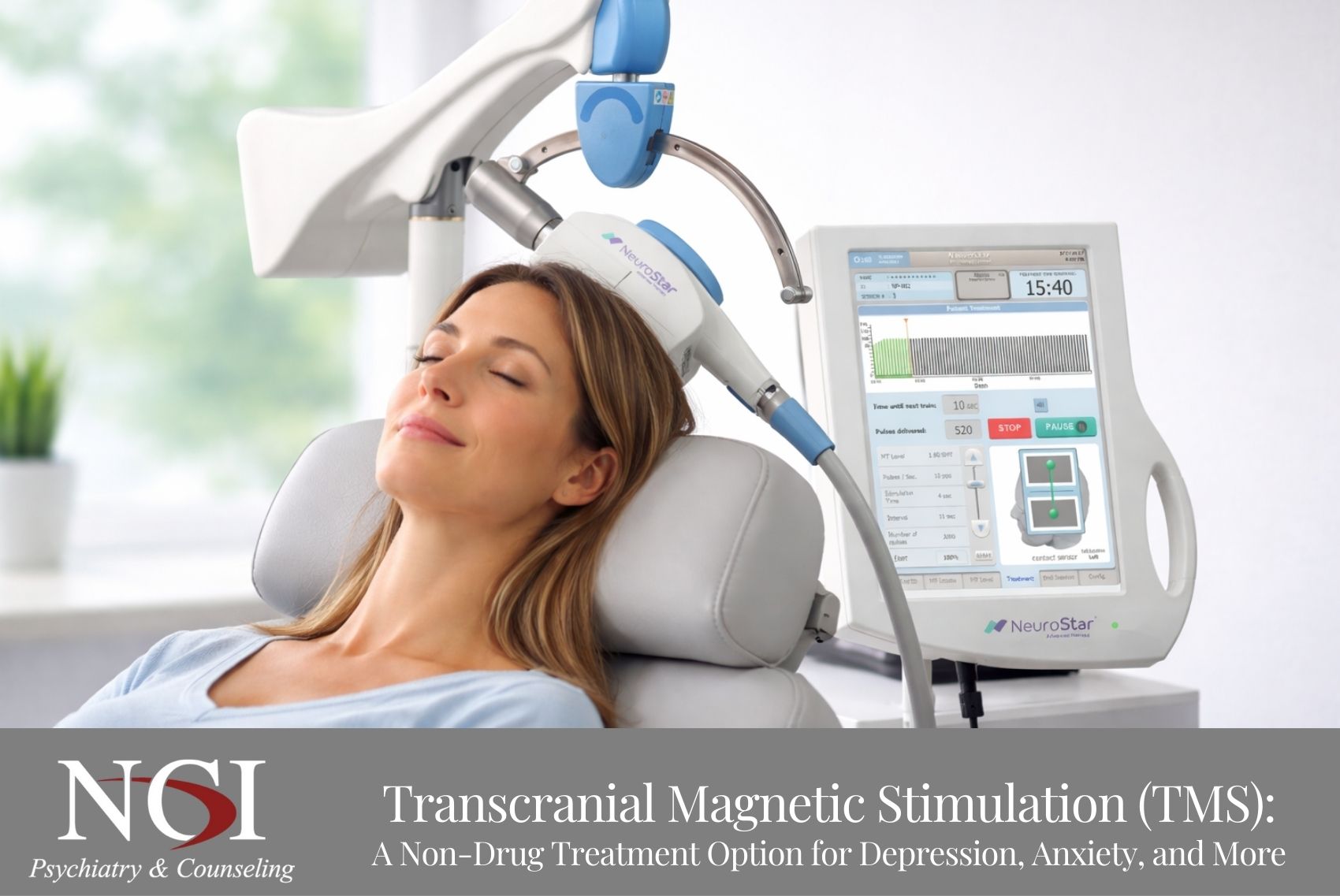
Transcranial Magnetic Stimulation (TMS) is an FDA-cleared treatment that uses focused magnetic pulses to stimulate specific areas of the brain involved in mood regulation. These magnetic pulses activate underactive neural pathways commonly associated with depression and certain anxiety-related conditions.
TMS does not require surgery, anesthesia, or medication, and patients remain awake and alert during treatment.
How Does TMS Work?
TMS works by delivering gentle magnetic pulses to targeted areas of the brain—most commonly the prefrontal cortex, which plays a key role in mood, decision-making, and emotional regulation.
In individuals with depression and related disorders, these brain regions may be underactive. TMS helps “reawaken” these areas, encouraging healthier brain activity and improved communication between neurons over time.
A typical TMS session lasts about 20–40 minutes, and patients can return to normal daily activities immediately afterward.
Conditions That May Benefit from TMS
TMS is most widely known for treating major depressive disorder (MDD), particularly in individuals who have not responded well to antidepressant medications. Ongoing research and clinical experience also support its use for other conditions, including:
- Treatment-resistant depression
- Anxiety disorders
- Obsessive-compulsive disorder (OCD) (FDA-cleared protocols)
- Post-traumatic stress disorder (PTSD) (off-label, evidence-supported)
- Bipolar depression (carefully evaluated cases)
- Chronic stress and mood dysregulation
Our clinical team carefully evaluates each patient to determine whether TMS is an appropriate option.
Benefits of TMS Therapy
TMS offers several advantages compared to traditional treatment approaches:
- Non-drug treatment – no systemic medication side effects
- Non-invasive – no surgery or needles
- No anesthesia required
- Minimal side effects, most commonly mild scalp discomfort or headache
- No downtime – patients can drive themselves home and resume normal activities
- Evidence-based with strong clinical support
For many individuals, TMS provides renewed hope after years of struggling with symptoms.
What to Expect During TMS Treatment
- Initial Consultation
A comprehensive psychiatric evaluation is conducted to assess symptoms, treatment history, and overall suitability for TMS. - Treatment Planning
The TMS device is precisely calibrated to your brain and treatment needs. - Treatment Sessions
Sessions are typically scheduled 5 days per week for several weeks, depending on the treatment plan. - Progress Monitoring
Symptoms and response are regularly evaluated to ensure optimal outcomes.
Is TMS Right for You?
TMS may be a good option if you:
- Have not achieved sufficient relief from medications
- Cannot tolerate medication side effects
- Prefer a non-drug approach
- Are looking for advanced, evidence-based mental health care
A consultation with a qualified mental health provider is the best way to determine if TMS fits your needs.
Frequently Asked Questions (Q&A)
Is TMS safe?
Yes. TMS has been extensively studied and is FDA-cleared for depression and OCD. It is considered safe when administered by trained professionals.
Does TMS hurt?
Most patients describe TMS as mildly uncomfortable at first, often feeling a tapping sensation on the scalp. This usually lessens as treatment continues.
Are there side effects?
The most common side effects are mild headache or scalp discomfort. Serious side effects are rare.
How long does it take to see results?
Some patients notice improvement within a few weeks, while others experience gradual benefits throughout the course of treatment.
Will I need to stop my current medications?
Not necessarily. TMS can often be used alongside medications, depending on your treatment plan.
Is TMS covered by insurance?
Many insurance plans cover TMS for treatment-resistant depression. Our office can help verify coverage and discuss options.
How long do the results last?
Many patients experience long-lasting relief. Some may benefit from maintenance sessions if symptoms return.
Why Choose Northwest Psychiatry & Counseling?
At Northwest Psychiatry & Counseling, we combine compassionate care with modern psychiatric treatments. Our team is dedicated to personalized mental health care, ensuring each patient receives thoughtful evaluation, clear education, and ongoing support throughout their treatment journey.
If depression, anxiety, or other mood disorders are interfering with your life, TMS may offer a new path forward.
Contact Information
Northwest Psychiatry & Counseling
📍 Address: 701 N Walton Blvd., Unit 6, Bentonville, AR 72712
📞 Phone (Appointments): 479-855-5704