
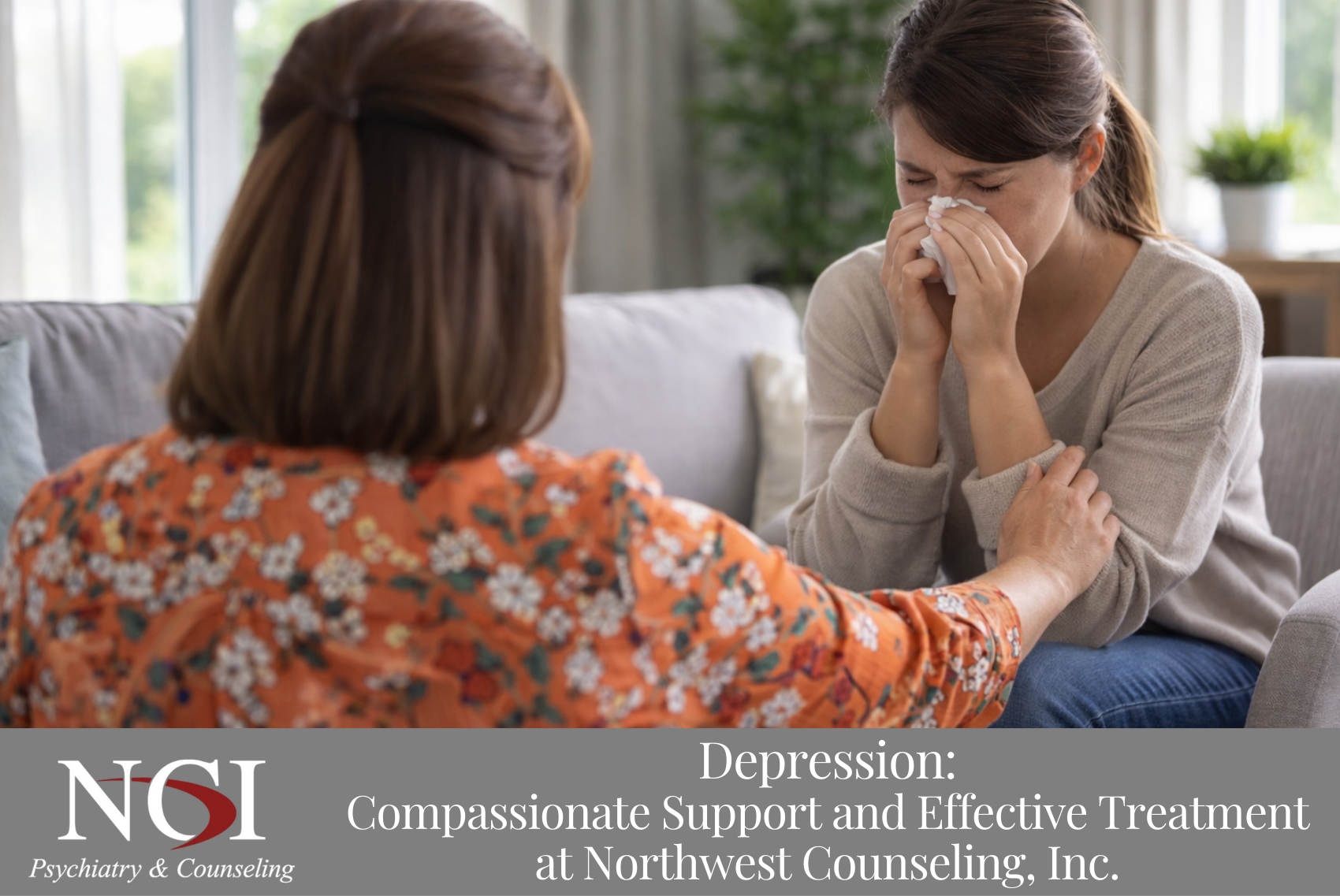
Depression is more than feeling sad or having a bad day—it is a serious mental health condition that can affect how a person thinks, feels, and functions in everyday life. Millions of people experience depression each year, yet many struggle in silence due to stigma, misunderstanding, or uncertainty about where to turn for help.
At Northwest Counseling, Inc., we believe that no one should face depression alone. Our experienced mental health professionals provide compassionate, evidence-based counseling services designed to help individuals regain hope, clarity, and emotional balance.
What Is Depression?
Depression, also known as major depressive disorder, is a mood disorder characterized by persistent feelings of sadness, emptiness, or hopelessness that last for weeks or longer. It can interfere with work, relationships, physical health, and overall quality of life.
Depression is not a personal weakness or something that can simply be “snapped out of.” It is a real medical and psychological condition that responds well to professional treatment and support.
Common Symptoms of Depression
Depression can look different from person to person, but common symptoms include:
- Persistent sadness, emptiness, or hopelessness
- Loss of interest in activities once enjoyed
- Fatigue or low energy
- Changes in sleep (insomnia or oversleeping)
- Changes in appetite or weight
- Difficulty concentrating or making decisions
- Feelings of worthlessness, guilt, or shame
- Irritability or restlessness
- Physical symptoms such as headaches or body aches
- Thoughts of death or suicide
If these symptoms persist for two weeks or more, it may be time to seek professional help.
Causes and Risk Factors
Depression often develops from a combination of factors rather than a single cause. These may include:
- Biological factors: Genetics, brain chemistry, and hormonal changes
- Psychological factors: Low self-esteem, trauma, or chronic stress
- Environmental factors: Relationship difficulties, job stress, financial strain, or loss
- Medical factors: Chronic illness, pain, or certain medications
Understanding the root causes of depression is an important step in creating an effective treatment plan.
How Counseling Can Help with Depression
Counseling provides a safe, confidential space to explore thoughts, emotions, and experiences that contribute to depression. At Northwest Counseling, Inc., our therapists use proven approaches tailored to each individual’s needs, which may include:
- Cognitive Behavioral Therapy (CBT)
- Trauma-informed therapy
- Solution-focused therapy
- Supportive and strengths-based counseling
Through therapy, individuals can learn healthier coping strategies, challenge negative thought patterns, improve emotional regulation, and rebuild a sense of purpose and connection.
Depression Treatment Is Not One-Size-Fits-All
Everyone’s experience with depression is unique. That’s why our clinicians work collaboratively with clients to develop personalized treatment plans. For some, counseling alone may be effective; for others, a combination of therapy, lifestyle changes, and coordination with medical providers may offer the best outcomes.
Our goal is to empower clients with tools that support long-term emotional well-being—not just short-term relief.
Frequently Asked Questions About Depression
Q: How do I know if I’m depressed or just going through a rough time?
A: Feeling sad after a stressful event is normal. Depression typically involves symptoms that last at least two weeks and significantly interfere with daily functioning. A mental health professional can help determine what you’re experiencing.
Q: Can depression go away on its own?
A: Some mild depressive symptoms may improve over time, but untreated depression often persists or worsens. Professional counseling can shorten recovery time and reduce the risk of recurrence.
Q: Is depression a sign of weakness?
A: No. Depression is a medical and psychological condition influenced by biology, environment, and life experiences. Seeking help is a sign of strength, not weakness.
Q: How long does counseling for depression usually take?
A: The length of therapy varies depending on symptom severity, personal goals, and individual progress. Some people notice improvement in a few weeks, while others benefit from longer-term support.
Q: What if I’ve tried therapy before and it didn’t help?
A: Different therapists and approaches work for different people. If past therapy wasn’t effective, that doesn’t mean counseling won’t help—it may simply require a different approach or provider.
Q: Do I need medication for depression?
A: Medication can be helpful for some individuals, but it is not always necessary. A mental health professional can help you decide what options are most appropriate and, if needed, coordinate with a medical provider.
Q: When should I seek immediate help?
A: If you are experiencing thoughts of self-harm or suicide, seek immediate help by calling 911, visiting the nearest emergency room, or contacting a crisis hotline right away.
Compassionate Depression Counseling in Bentonville, AR
If you or someone you love is struggling with depression, help is available. Northwest Counseling, Inc. is committed to providing supportive, confidential, and professional mental health care to individuals in Bentonville and the surrounding communities.
Contact Information
Northwest Counseling, Inc.
701 N Walton Blvd. Unit 6
Bentonville, AR 72712
Phone: (479) 855-5704
Website: https://ncicares.com